
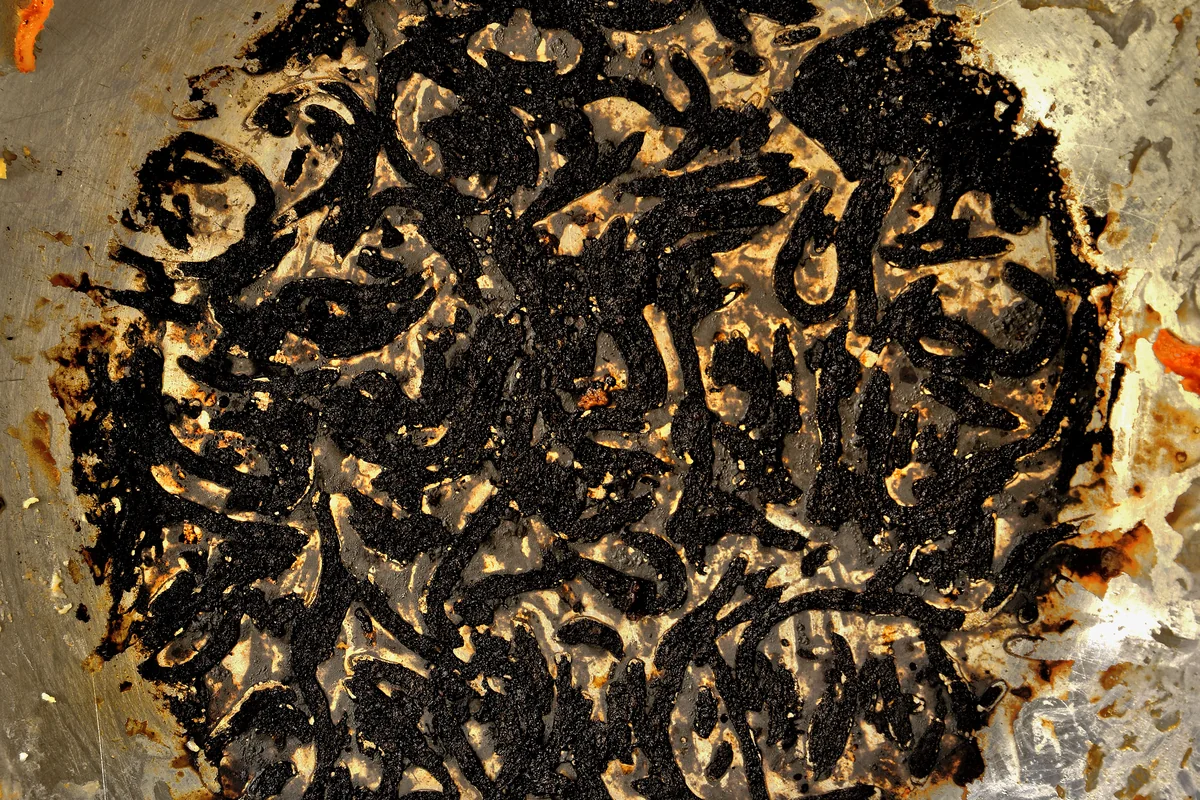
Quick answerFor durable stainless-steel or uncoated metal cookware, soak first, use hot water and dish soap, then try a damp baking-soda paste with a non-scratch pad. Avoid steel wool and aggressive abrasives on nonstick, coated, polished or delicate finishes.
What you will need
- Hot water
- Dishwashing liquid
- Baking soda
- Wooden or silicone scraper
- Non-scratch sponge or cloth
Step-by-step
- Let the pan cool enough to handle safely. Avoid shocking hot cookware with cold water.
- Soak it. Add hot water and a small amount of dish soap. Give the residue at least 20–30 minutes to soften.
- Lift what has loosened. Use a wooden or silicone utensil instead of a sharp metal edge.
- Make a baking-soda paste. Mix baking soda with just enough water to form a spreadable paste. Apply to the remaining residue.
- Let it sit, then work gently. Use a non-scratch pad and moderate pressure.
- Rinse and repeat if needed. Several gentle cycles are safer than one aggressive one.
What about vinegar?
Vinegar may help with mineral discoloration on some acid-safe cookware, but it is not the first tool we reach for when the main problem is carbonized food or grease. Mixing vinegar directly into baking soda also consumes much of the acid and alkalinity that make each ingredient useful on its own.
Be careful with coated cookware
Check the manufacturer’s care instructions first. Nonstick coatings, seasoned cast iron, enameled surfaces, copper finishes and specialty bakeware may require different care. A method that is fine for bare stainless steel can damage another pan.
When to stop scrubbing
If the residue is no longer transferring and the surface itself appears to be changing color, texture or gloss, stop. At that point you may be abrading the finish rather than removing soil.
So Blessed pro tip
Soaking is underrated. Ten extra minutes of dwell time can save a lot of unnecessary scrubbing and reduce the chance of scratching a surface.